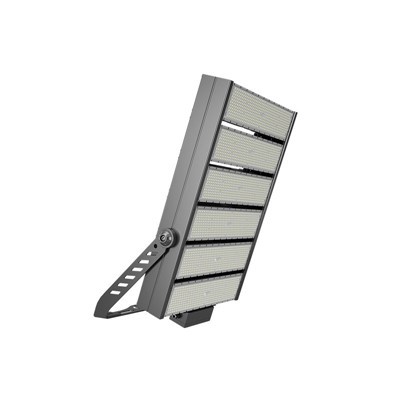

Recently, a small video titled "Do you think this spotlight should be cancelled?" became popular on social platforms. The photographer and his companions were driving on the highway. The flashing fill light in front made it impossible to see the road conditions at all. In the video, he suggested to cancel the spotlight on the high-speed gantry. This small video received more than 1.7 million likes, and many netizens expressed "strongly agree".

Double-edged sword's flashing lights
In recent years, with the rapid increase in the number of motor vehicles and the expansion of traffic roads in various places, the contradiction between the status quo of traffic management and demand has gradually emerged, especially the management and control of night traffic as a prominent problem. Compared with urban roads, the highway scene has no ambient light and fast speed, which puts forward higher requirements for night traffic management and control. After the cancellation of the provincial toll gates, the demand for recording ETC passing information has increased on a large scale. In this way, it is necessary to effectively manage motor vehicles and respond to the demands of public security prevention and control. The widespread application of bayonet capture systems has become the solution.
If you want to take a clear picture in the dark, the current industry's usual practice is to monitor the camera + flashing light, use flashing fill light to ensure the quality of the shooting picture, in order to obtain clearer photos of vehicles and passengers. From the perspective of traffic management and control, this can effectively ensure the smooth flow of roads and the safety of the people, but the problem of light pollution will also follow. For drivers, the "instantaneous blindness" caused by flashing lights is a major hidden danger that seriously threatens driving safety.

Reject light pollution, the industry continues to explore
In response to the problem of bayonet light pollution, the industry is constantly exploring different solutions. They have their own technical emphasis, but the ultimate appeal is to reduce white light flashes without affecting driving safety. Two of these programs have become mainstream:
One is black light technology, which uses two starlight-level image sensors, through special optical components, one of which collects image brightness information and object contours through infrared supplementary light, and the other collects color information, and then integrates image fusion algorithms. The image information collected by the two sensors is fused, and the final output is both bright and colorful.
The second is the AI ultra-low-light technology first released by Kodak. It uses a self-developed deep learning low-light enhancement algorithm. In a low-light environment, the algorithm model skips the ISP imaging modulation method of traditional cameras and captures a large number of scenes. For image learning, the algorithm directly restores the image of the sensor input data. This can greatly reduce the camera's reliance on the fill light. While improving the brightness of the image, it can also fully restore the details of the object's color and texture. The image restored by this algorithm can not only improve the subjective experience of the human eye on the captured image, but also improve the feature analysis of the image by many intelligent algorithms in the back-end.
Why is it said that AI ultra-micro light can really solve the problem of light pollution from the source
As a mainstream solution, black light technology can reduce light pollution to a certain extent, but it is still inadequate in terms of technical principles. First of all, the sensor that collects the brightness is realized by relying on infrared supplementary light. In the application of traffic bayonet, because the infrared light transmittance of the explosion-proof film pasted on the front windshield of the car is very poor, the bayonet using infrared strobe light cannot collect the image information of the front passenger and passengers. When encountering some objects with infrared reflective materials, the color of the image restored by black light technology will be biased. Secondly, another color-collecting camera in the scheme needs ambient light like a normal camera. In a completely dark environment, the black light camera also has to rely on a relatively strong LED fill light to fill the light.

Kodak AI Ultra Low Light runs the AI image enhancement algorithm independently developed by Kodak on the built-in AI chip. It only needs a low-illuminance LED directional fill light at night, which is basically imperceptible to the driver and the surrounding conditions. You can obtain high-quality captured images with high definition and high color guarantee, truly solve light pollution from the source, and meet the 24-hour high-fidelity image clue collection that users expect.
The Hubei Expressway Traffic Police took the lead in launching the Kodak AI ultra-light bayonet on the Hubei Expressway since last year. Currently, it has deployed more than 60 points near the service area, serving vehicle inspection and control, public security control, illegal investigation and punishment, and assistance Recording ETC passing information has not only significant business effects, but also no light pollution.
In the future, by deploying or transforming Kodak AI ultra-light bayonet on highways in various places, it is believed that it can not only meet the business needs of traffic police and transportation departments around the clock, but also solve the problem of light pollution at the source, and provide a safe high-speed driving environment for the masses. .