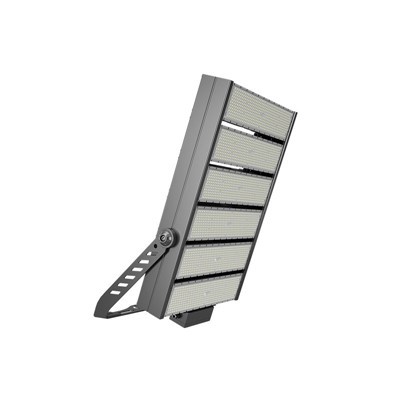


Your Professional Street Light Supplier
Founded in 2005, Hangzhou ZGSM Technology Co., Ltd is located in Linglong Industrial Park, west of Hangzhou. ZGSM is a hi-tech and private Enterprise devoted to R&D, producing and selling high-quality LED indoor/outdoor lights, LED traffic lights, solar-powered LED lighting systems, and so on.
Quality Inspection
Our QC manager has more than 20 years of work experience, which makes our quality inspection from materials, production, finished products to shipments have very strict processes and experience. And for product problems reported by after-sales, we can also find problems and propose solutions in the fastest time.
Cost-effective products
We are always committed to pursuing the best quality and price ratio and providing customers with the most cost-effective products.
Team Strength
Each leader of our R&D, Quality, Production and Sales departments has more than 12 to 20 years of experience in LED lighting and is able to provide effective LED lighting solutions quickly and professionally.
Fast Delivery
Our regular delivery time is generally within 3 days for samples and within 2-3 weeks for bulk orders.
-
![38w Energy Efficient Street Lighting With CB]() 38w Energy Efficient Street Lighting With CB38W ECONOMICAL STREETLIGHTSeries Kmini LED Street LightModel:ZGSM-LD38KminiApplication:Street | Road | Highway | Parking lot | Bridge | Path
38w Energy Efficient Street Lighting With CB38W ECONOMICAL STREETLIGHTSeries Kmini LED Street LightModel:ZGSM-LD38KminiApplication:Street | Road | Highway | Parking lot | Bridge | Path -
![High Lumen 165lm/w Cobra Head Street Light Fixtures]() High Lumen 165lm/w Cobra Head Street Light FixturesMODULAR DESIGN 40W HIGH LUMEN LED CAR PARK LIGHTINGSeries H4 LED Parking Lot LightModel:ZGSM-LD40H4Application:Street | Road | Highway | Parking lot | Bridge | Path
High Lumen 165lm/w Cobra Head Street Light FixturesMODULAR DESIGN 40W HIGH LUMEN LED CAR PARK LIGHTINGSeries H4 LED Parking Lot LightModel:ZGSM-LD40H4Application:Street | Road | Highway | Parking lot | Bridge | Path -
![DMX 512 LED Pillar Light Column Lamp]() DMX 512 LED Pillar Light Column LampDMX 512 LED Pillar Light Column Lamp. Model:ZGSM-RBL1-30. Power:30w. Efficacy:3030 LED 135lm/w. PF>0.95. THD70.
DMX 512 LED Pillar Light Column LampDMX 512 LED Pillar Light Column Lamp. Model:ZGSM-RBL1-30. Power:30w. Efficacy:3030 LED 135lm/w. PF>0.95. THD70. -
![LED Bollard Light]() LED Bollard LightLED Bollard Light. Model:ZGSM-RBL1-50. Power:50w. Efficacy:3030 LED 135lm/w. PF>0.95. THD70.
LED Bollard LightLED Bollard Light. Model:ZGSM-RBL1-50. Power:50w. Efficacy:3030 LED 135lm/w. PF>0.95. THD70. -
![ZGSM Public Street Light With LTE Lora Smart Intelligent Control System]() ZGSM Public Street Light With LTE Lora Smart Intelligent Control SystemZGSM Public Street light with LTE lora smart intelligent control system. Model:ZGSM-ST22-20S . Power:20W-240w . Efficacy:150lm/w . PF>0.95 . THD70 .
ZGSM Public Street Light With LTE Lora Smart Intelligent Control SystemZGSM Public Street light with LTE lora smart intelligent control system. Model:ZGSM-ST22-20S . Power:20W-240w . Efficacy:150lm/w . PF>0.95 . THD70 . -
![Ornamental Street Light Led]() Ornamental Street Light LedPole Mounted Street Light. Model:ZGSM-6139-70W. Power:70w. Efficacy:3030 LED 135lm/w. PF>0.95. THD70.
Ornamental Street Light LedPole Mounted Street Light. Model:ZGSM-6139-70W. Power:70w. Efficacy:3030 LED 135lm/w. PF>0.95. THD70. -
![Post Top LED Lights]() Post Top LED LightsPost Top LED Lights. Model:ZG-1094-40W. Power:40w. Efficacy:3030 LED 135lm/w. PF>0.95. THD70.
Post Top LED LightsPost Top LED Lights. Model:ZG-1094-40W. Power:40w. Efficacy:3030 LED 135lm/w. PF>0.95. THD70. -
![Pole Pendant Street Light]() Pole Pendant Street LightPole Mounted Street Light. Model:ZG-1058-50W. Power:50w. Efficacy:3030 LED 135lm/w. PF>0.95. THD70.
Pole Pendant Street LightPole Mounted Street Light. Model:ZG-1058-50W. Power:50w. Efficacy:3030 LED 135lm/w. PF>0.95. THD70. -
![Post Top Light Fitting]() Post Top Light FittingPost Top Light Fitting. Model:ZG-900-60W. Power:60w. Efficacy:3030 LED 135lm/w. PF>0.95. THD70.
Post Top Light FittingPost Top Light Fitting. Model:ZG-900-60W. Power:60w. Efficacy:3030 LED 135lm/w. PF>0.95. THD70. -
![classic Post Top Light]() classic Post Top Lightclassic Post Top Light. Model:ZG-900-60W. Power:60w. Efficacy:3030 LED 135lm/w. PF>0.95. THD70.
classic Post Top Lightclassic Post Top Light. Model:ZG-900-60W. Power:60w. Efficacy:3030 LED 135lm/w. PF>0.95. THD70. -
![ZGSM Public Road Light 20w]() ZGSM Public Road Light 20wZGSM public Road Light 20w. Model:ZGSM-ST22-20S . Power:20W . Efficacy:160lm/w . Lumen: 22500lm . PF>0.95 . THD70 .
ZGSM Public Road Light 20wZGSM public Road Light 20w. Model:ZGSM-ST22-20S . Power:20W . Efficacy:160lm/w . Lumen: 22500lm . PF>0.95 . THD70 . -
![ZGSM LED Street Light 150W]() ZGSM LED Street Light 150WZGSM LED Street Light 150W. Model:ZGSM-ST22-150L . Power:150W . Efficacy:160lm/w . Lumen: 22500lm . PF>0.95 . THD70 .
ZGSM LED Street Light 150WZGSM LED Street Light 150W. Model:ZGSM-ST22-150L . Power:150W . Efficacy:160lm/w . Lumen: 22500lm . PF>0.95 . THD70 .


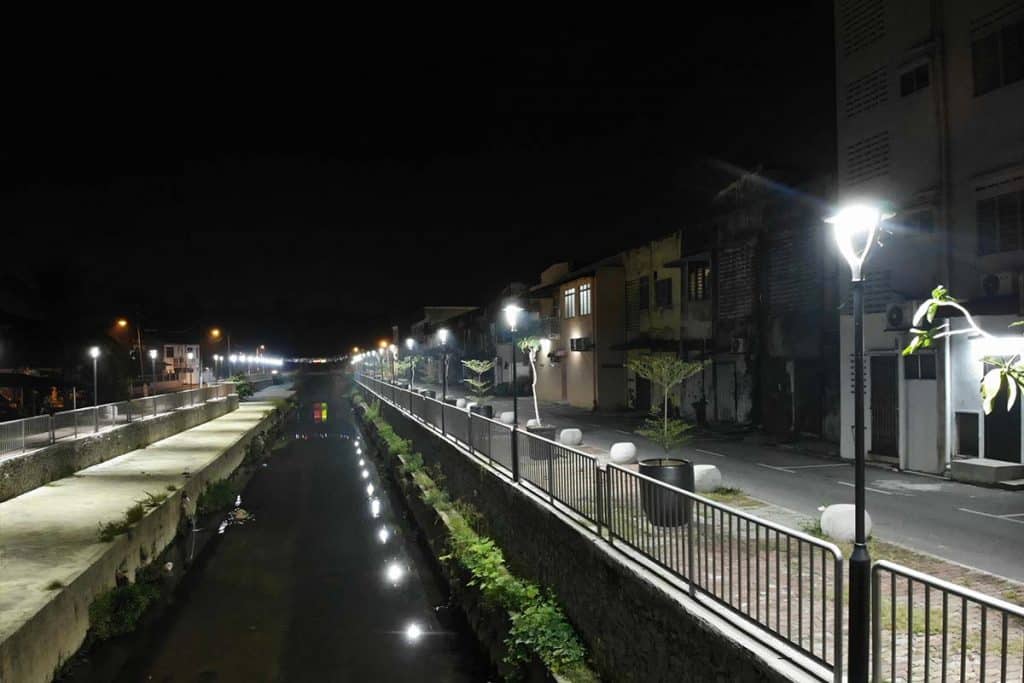
LED street light is a lamp composed of light emitting diodes (LEDs). It will be installed on the top of a pole used to provide lighting for roads, sidewalks, parking lots or other exterior areas. It is an infrastructure construction unit that ensures the safety of roads, residences or other exterior areas.
Application of LED street light
LED Road lamps can be used for many different applications.
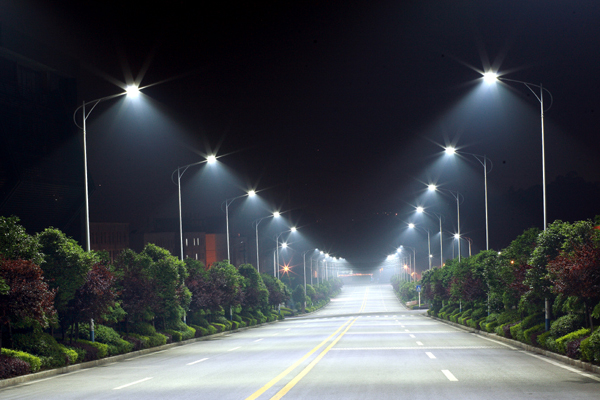
Primary roads, secondary roads, and highways need extra light for safety. For these roads, the lighting class requirement is normally from M1 to M6.

Pedestrian streets, cycleways, emergency lanes, other road areas lying along the carriageway, and residential roads. For these applications, the P lighting class(P1 to P6) is normally required.

Other exterior lighting, like the schoolyard, parking area, urban square, and outside of the factory. For these areas, you can send us a drawing so we can make the lighting design accordingly.04
Difference Between LED and Traditional Street Light

- LED Street Lights: LEDs are very energy efficient and convert a large portion of electrical energy into visible light. They consume less electricity and can save a lot of energy.
- Traditional Street Lights: Traditional lights such as high pressure sodium lamps are less energy efficient and a large portion of the energy is wasted in the form of heat.

- LED Street Lights: LED street lights have a longer lifespan, typically 25,000 to 100,000 hours. This reduces maintenance and replacement costs.
- Traditional Street Lights: Traditional street lights have a shorter lifespan, typically 10,000 to 20,000 hours, and therefore need to be replaced more frequently.

- LED street lights: LEDs provide instant full lighting when turned on, without warming up.
- Traditional street lights: Some traditional lighting technologies may require a warm-up period before reaching full brightness.

- LED street lights: LEDs emit light in a specific direction, which allows for efficient light distribution and minimizes light pollution. The light is directed where it is needed.
- Traditional street lights: Traditional street lights emit light in all directions, resulting in greater light dispersion and potential light pollution.

- LED Street Lights: LED lighting has a variety of color temperatures and good color rendering. Different color temperatures can be selected to suit specific applications.
- Traditional Street Lights: Traditional street lights have limited color temperature options and may not provide accurate color rendering.

- LED street lights: LED lights have a lower environmental impact due to reduced energy consumption and longer lifespan. They do not contain hazardous materials such as mercury.
- Traditional street lights: Traditional lights may contain hazardous materials such as mercury in fluorescent lamps, which may pose disposal challenges and environmental risks.

- LED Street Lights: LEDs are easily dimmed and compatible with control systems, enabling adaptive lighting solutions that further increase energy savings.
- Traditional Street Lights: Some traditional lights can be dimmed, but the technology is generally not very flexible and efficient.

- LED Street Lights: LED street lights have a longer lifespan and therefore require less maintenance, which reduces operating costs.
- Traditional Street Lights: Traditional street lights may require more frequent maintenance and replacement, which increases maintenance costs.
Important Parameters of LED Street Light
The important parameters of LED street lights include
Wattage
Wattage refers to the power consumption of LED street lights. It affects brightness, with higher wattage lights being brighter but consuming more energy.
LED Driver
The LED driver is responsible for managing the current and voltage that powers the LEDs. A high-quality LED driver ensures stable brightness and extends the life of the LEDs.
LED Chip
The LED chip is the light-emitting element of the LED. Different LED chips offer different brightness and efficiency. Choosing high-quality LED chips results in brighter, longer-lasting lighting.
Lenses/Optics
CCT describes the color of an LED light. Lower CCT values (around 2700-3000K) produce warm white light, while higher CCT values (around 4000-5000K) produce cool white or daylight-like light.
Color Temperature (CCT — Correlated Color Temperature)
CCT describes the color of an LED light. Lower CCT values (around 2700-3000K) produce warm white light, while higher CCT values (around 4000-5000K) produce cool white or daylight-like light.
Color Rendering Index (CRI)
The CRI measures how accurately LED light renders colors compared to natural light. The higher the CRI, the greater the color accuracy.
Why Choose LED street light From ZGSM Lighting?
Each leader of our R&D, Quality, Production and Sales departments has more than 12 to 20 years of experience in the LED lighting field and is able to provide effective LED lighting solutions quickly and professionally.
High cost-effective products
We are always committed to pursuing the best quality and price ratio and providing customers with the most cost-effective products.
Product Certification
ZGSM has passed ISO9001, ISO14001, ISO45001, ISO50001 international quality and environmental management system certifications, and most of its products have passed CE, UL, RoHS, CB, ENEC, SAA, DLC and other certifications issued by TUV SUD.
Fast Delivery
Our regular delivery time is generally within 3 days for samples and within 2-3 weeks for bulk orders.
Certification Exhibition
As a reputable manufacturer of LED street light luminaires, we take pride in our products’ extensive certifications and test reports. Our street luminaires have obtained prestigious certifications such as ENEC, CE, CB, ROHS, IEC62471, LM80, LM79, and more.
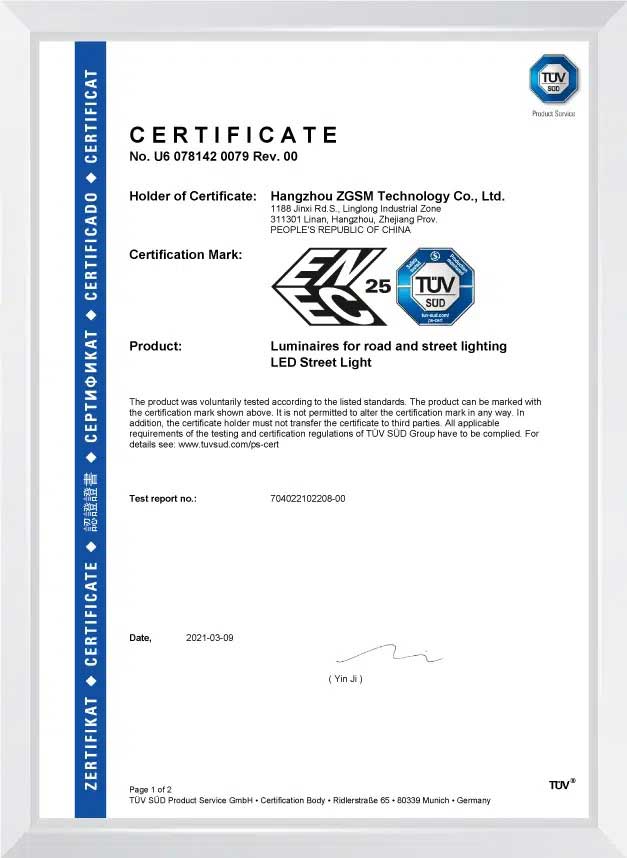
ENEC by TUV
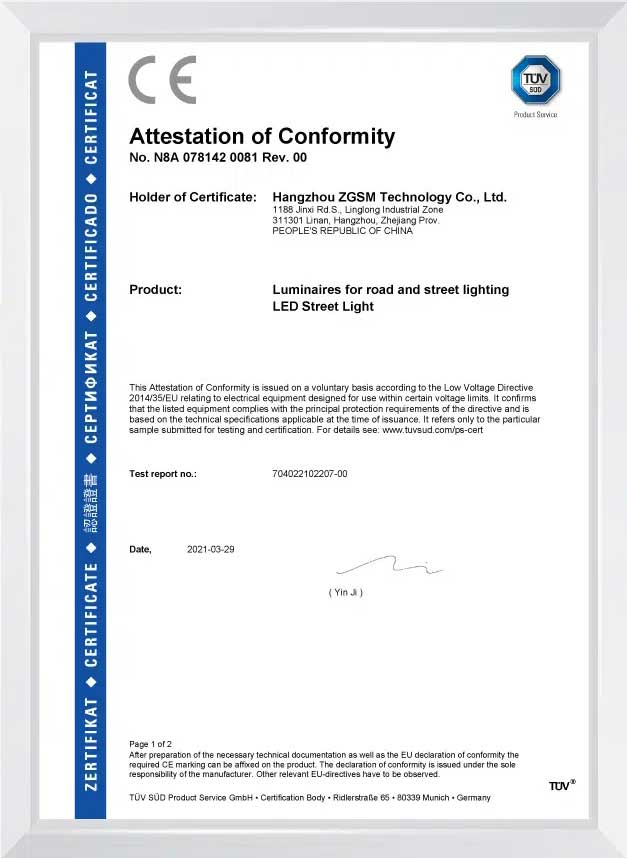
CE by TUV
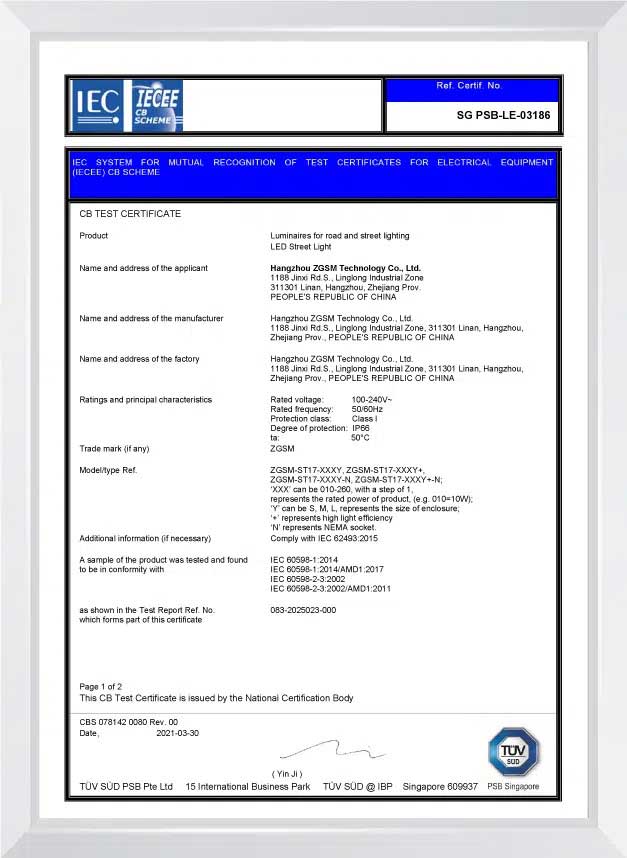
CB by TUV

UL
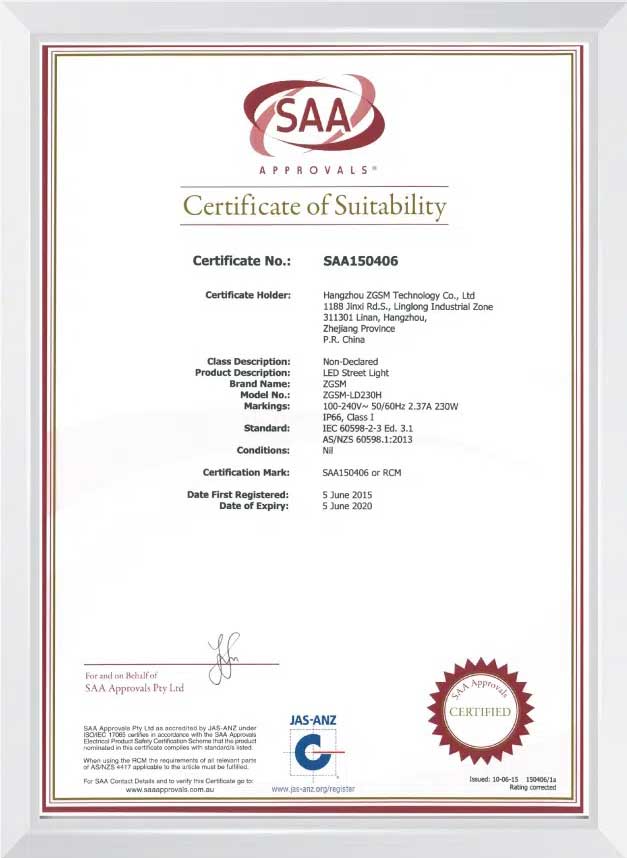
SAA
FAQ
Q: Development of Street Lamp Technology
Q: What's the different parts of a street lighting?
Q: Differing from LED street lights, what are other types of street lights?
Q: What function does a street light serve?
Q: How the street lights classified by shape?
Q: What are the different types of street lights?
Q: What is the distance between two street lights?
Q: What is the standard height of a street light?
Q: What are the requirements of good street lighting?
Q: How tall is a street light?
Q: Why are LED street lamps adopted in smart cities?
Q: How do street lights work?
Q: What circuits do street lamps use?
Q: How do LED street lights compare to high-pressure sodium street lights?
Q: What is the color temperature of the LED street lamp?
Popular Products