



Can LED Tunnel Lights Be Used in Military Tunnels? A Manufacturer's Technical & ROI Guide
When contractors and procurement officers manage underground infrastructure-whether it's subterranean supply routes, tactical storage vaults, or command bunkers-lighting is rarely just about "seeing in the dark." In harsh underground military environments, lighting directly impacts operational readiness, energy independence, and life safety.
Standard commercial fixtures simply don't hold up down there. So, can commercial-grade or high-spec LED tunnel lights be deployed in military tunnels?
The direct answer is yes-provided they meet strict industrial durability, IP ratings, and thermal performance standards. Modern solid-state LED systems have effectively rendered traditional Metal Halide (MH) and High-Pressure Sodium (HPS) legacy systems obsolete in defense and heavy-industrial underground applications.
Below, we break down the engineering requirements, total cost of ownership (TCO), and performance metrics you need to evaluate before specifying LED luminaires for military-grade underground projects.
Technical Challenges of Underground Military Lighting vs. Standard Road Tunnels
While highway tunnels focus primarily on high-speed glare reduction and continuous transit lighting, military tunnels present a far more punishing operational environment:

- Extreme Moisture & Seepage: Water continuously percolates through bedrock, exposing fixtures to constant condensation, chemical runoff, and high ambient humidity.
- Air Quality & Dust Accumulation: Limited mechanical ventilation causes heavy particulate matter, diesel exhaust, and fine dust to settle on light engines and housings.
- Physical Shock & Vibration: Heavy equipment movement, tactical transport, and potential proximity shocks require solid-state construction without fragile glass tubes or filaments.
- Off-Grid Power Constraints: Remote installations often rely on diesel generators, solar arrays, or microgrids, making lumen-per-watt efficiency directly tied to fuel logistics and security risks.
5 Key Reasons Engineers Are Replacing Legacy MH/HPS Fixtures with LEDs
1. Ingress Protection (IP67/IP68) & Corrosion Resistance
Legacy sodium and halide fixtures frequently fail not because the lamp burns out, but because moisture penetrates the housing, corroding internal ballasts and sockets within 12–18 months.
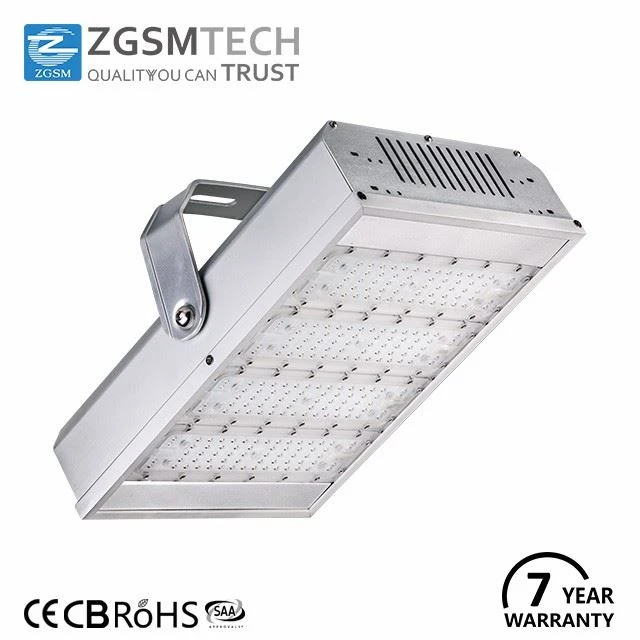
For critical subterranean pathways, we engineer specialized fixtures using marine-grade die-cast aluminum alloys and sealed silicone gaskets. For damp, high-seepage sections, utilizing a professional waterproof 120w led tunnel light rated at IP67 or IP68 ensures the unit withstands continuous high-pressure washdowns and submersion without compromising internal electronics.
2. Lifespan Maximization & Reduced Maintenance Risk
In deep underground networks, replacing a burnt-out bulb isn't just a minor maintenance task-it requires sending technicians into restricted, narrow, and potentially hazardous zones.
- Legacy MH/HPS Lifespan: ~10,000 to 15,000 hours (requiring replacement every 1–2 years).
- Heavy-Duty Industrial LED Lifespan: 50,000 to 100,000+ hours (L70 rating).
Operating 10 hours a day, a high-quality LED system can run for over 13 years maintenance-free. For periodically accessed backup vaults or emergency routes, these fixtures can last for decades, virtually eliminating routine maintenance downtime.
3. Immediate Ignition & Emergency Readiness
Metal halide lamps take 5 to 10 minutes to reach full lumen output after powering on, and cold strikes can delay illumination even further. In tactical scenarios or power transfer events, a 10-minute delay is unacceptable. LEDs provide instantaneous 100% lumen output the microsecond power is restored.
4. Precision Optical Control: Eliminating Glare & Shadow Zones
Direct operational safety depends on uniform light distribution. Old omnidirectional bulbs waste up to 40% of their light bouncing off dark ceilings or creating harsh floor glare.
Custom secondary optics allow LEDs to cast precise, directional light beams along walking paths and transport lanes.
- For narrow secondary access tunnels: A compact tunnel floodlight 40w led tunnel light delivers crisp, targeted illumination without overwhelming space.
- For wider main transport corridors: Higher-wattage optical engines eliminate blind spots, preventing personnel trips and vehicle navigation hazards.
5. Thermal Resilience Across Extreme Ambient Ranges
Whether deployed in sub-zero alpine bunkers or desert facility tunnels where ambient rock temperatures surge, LEDs demonstrate superior environmental stability. Quality industrial units are rated for operation between -40°C (-40°F) and 55°C (130°F). Advanced integral heat sinks dissipate thermal energy effectively, preventing premature lumen depreciation even in unconditioned spaces.
Cost-Benefit Analysis: ROI in Fuel Logistics and Operational Costs
While heavy-duty LED luminaires carry a higher initial capital expenditure (CapEx) than low-end legacy fixtures, the operational savings (OpEx) yield a rapid payback period.
| Metric | Legacy 200W Metal Halide | Equivalent 100W Industrial LED | Operational Impact |
| System Power Consumption | ~240W (including ballast draw) | 100W | >58% Energy Reduction |
| Luminous Efficacy | 50 – 70 lm/W | 140 – 170+ lm/W | Higher light output per watt |
| Warm-Up / Restrike Time | 5–10 Minutes | Instant On/Off | Zero operational delay |
| Maintenance Cycle | Every 12–18 Months | 10+ Years | Massively reduced labor cost |
Real-World Case Study: A facility management team for a 2-mile underground supply corridor replaced failing metal halide units with our commercial Led Tunnel Lamp series.
Prior to the retrofit, annual spend on replacement lamps, ballast repairs, and generator fuel for lighting exceeded $12,000/year. Post-installation metrics showed annual operating costs dropped below $2,000/year-delivering over $15,000 in direct savings within the first 6 months while significantly improving optical clarity for transport crews.
Specialized Deployment Scenarios in Underground Military Facilities
Different zones within an underground facility demand tailored photometric setups:
- Low-Clearance & Tactical Passageways: Requires low-profile, impact-resistant housings that won't snag passing equipment.
- Command Bunkers & Inspection Bays: Demands high CRI (Color Rendering Index) and zero electromagnetic interference (EMI). Utilizing low-profile solutions like a high quality 160w led recessed light provides flush-mounted, clean illumination that won't interfere with sensitive communications, radar, or control hardware.
- Security Watchpoints & Motion Zones: Integrating 0-10V or DALI dimming protocols allows facility managers to dial lighting down to 20% during low-activity periods, preserving perimeter security visibility while cutting power draw to a minimum.
Technical Procurement Checklist for B2B Buyers
When sourcing industrial lighting for high-stakes subterranean projects, ensure your supplier provides full photometric reports and factory test certifications covering:
- Ingress Protection Certification: IP65 baseline; IP67/IP68 for high-moisture/washdown zones.
- IK Impact Rating: Minimum IK08 to IK10 shatterproof housing standards.
- EMI / EMC Compliance: Driver shielding to prevent radio signal noise.
- Thermal Management Specs: Integrated aluminum heat sinks with rated junction temperatures ($T_j$).
- Optical Adjustability: Multiple color temperature (CCT) options (3000K warm white to 5000K daylight) to reduce long-shift visual fatigue.
- Supply Chain & Pricing Structure: Direct OEM factory sourcing to secure wholesale price led tunnel lights without distributor markups.
Partner with an OEM Illumination Manufacturer
Upgrading underground tunnel lighting isn't just a bulb swap-it's an engineering upgrade that safeguards personnel, lowers fuel demand, and ensures long-term operational resilience.
As a direct LED manufacturer specializing in heavy-duty industrial, street, and floodlighting solutions, we deliver complete turn-key photometric planning, custom optics, and factory-direct pricing for international B2B contractors, municipal planners, and project procurement teams.
Need a custom lighting simulation (DIALux) or technical specs for your upcoming project?
[Contact our engineering team today] to discuss your project requirements, request sample units, or receive a factory-direct quote.
References & Industry Standards
- U.S. Department of Defense. (2022). Energy Efficiency and Sustainability Guidelines for Military Facilities. Office of the Under Secretary of Defense for Acquisition and Sustainment.
- International Dark-Sky Association. (2021). Lighting for Safety and Security in Tunnels. IDA Technical Report.
- National Electrical Manufacturers Association. (2020). Performance Standards for LED Tunnel Lighting Fixtures. NEMA Publication 77-2020.
- U.S. Army Corps of Engineers. (2019). Underground Facility Design and Construction Guide. Department of the Army.
- Lighting Research Center, Rensselaer Polytechnic Institute. (2022). LED Lighting Performance in Extreme Temperature Environments. LRC Technical Brief.


