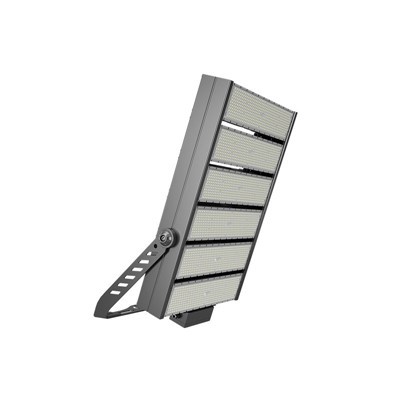

Street lighting is ushering in a new dawn; cities are switching from high-pressure sodium lamps to LED lights. Streetlights are getting more attention than they have in a long time. Debate has arisen about whether to use LED lights. Some people are concerned about whether LED street lights are good or not.
Therefore, the evaluation of street lights becomes even more critical. People want to know what kind of street lights to use. They also want to know how to identify a good or bad light. There are many questions without answers. So, we are here to answer your questions.
Streetlights are vital to businesses. They are vital to the safety of pedestrians and drivers at night. Additionally, they affect the aesthetics of a place. Therefore, having the right candidate is crucial. No one wants to buy a lamp that burns out next month. Or street lights that can't withstand weather conditions.
So, how to evaluate street lights, especially LED street lights? Let's discuss this. We'll show you how to identify a good LED from a bad one. First of all, let's first understand what LED street lights are.
What is LED street light?
LED street lights are also called LED street lights. It refers to street lights using LED technology. That is, light emitting diodes. Producers use this technology especially to improve efficiency and durability. There are many other reasons why manufacturers use LEDs.
LED lights radiate low heat and are more environmentally friendly. It focuses more light and has stronger color rendering. So, how do we evaluate the characteristics of this lamp? Going forward, we will discuss this issue.
What are the characteristics of LED street lights?
Let us take a look at some of the characteristics of LED street lights. We will also highlight some of the benefits of LED lights.
LED uses advanced technology to emit light. It has high brightness and lumens, which are used to measure brightness. LEDs are not thermally driven, but electrically driven. It consists of parts that convert energy into light. LED lights also have heat sinks that help dissipate heat.
LED technology is very beneficial for street lights. It helps achieve the purpose of illuminating a specific point. This is because LEDs are directional. That is, the light is focused in one direction. This helps prevent energy wastage by lighting unwanted areas.
The luminous efficiency of LEDs also exceeds that of ordinary street lights. It reaches 110-130lm/W and can go higher. LED lights also have higher color rendering than regular lights. The color rendering of high-pressure sodium lamps is 23. LED lights have a color rendering of over 75.
LED street lights have low attenuation, and the annual light attenuation is less than 3%. This means that 10 years later, it still meets street requirements. It lasts longer. LED street lights also have excellent heat dissipation control. This helps it dissipate heat and operate in cold conditions.
It is highly reliable, durable and contains no harmful substances. And traditional street lights contain mercury and lead. These are some of the advantages of LED street lights.
But its disadvantage is that the power of a single LED lamp is low. You will need multiple panels to get more power. Also, despite reaching 75+, its color rendering is still low.
Are LED street lights good or bad?
Now we have seen some of the features, advantages and disadvantages of LED lights. How to judge the quality of LED lights?
There are different types of LED lights. Therefore, it can be difficult to evaluate everything with the same criteria. But there are still some basic ways to evaluate LED lights.
There are some crucial aspects to the operation of any street light. Some of these include:
1. Color temperature
The color temperature of street lights is crucial. It refers to the color of emitted light, measured in degrees Kelvin. This simply refers to the color produced by light. That is, whether it is more bluish or yellowish.
Light in the 4,000 Kelvin range is considered blue. And research shows that these are not necessarily good for humans. It is considered a harsh light and somewhat unpleasant to residents. In addition, it may affect the driver's vision at night.
Therefore, when evaluating LED street lights. You need to consider its color temperature. LEDs with a color temperature over 4,000 Kelvin are not good. But there are also LEDs with lower color temperatures. So you have other options to choose from.
2. Installation
You must also evaluate the installation process. Installation methods can have an impact on residents. So, you can't ignore this when evaluating.
If installed incorrectly, it can impact residents and even pedestrians. It can even project lights into people's homes. Or the flash light enters the driver's eyes, which is very dangerous.
But for LED lamps, the installation is horizontal. The lights are installed horizontally to ensure that the light does not disturb residents. Therefore, LEDs will not cause unwanted flashes in your home.
Additionally, LEDs are designed to focus light in one direction. This helps focus streetlights where they are needed. Therefore, LEDs are ideal for street lights.
3. Glare
One of the big problems with street lights is glare. Intense bright lights can cause glare beyond the required distance. Therefore, it affects driver safety. It even causes pedestrians to squint.
This is a problem with LED lights because it is very bright. Therefore, it may send glare into houses and streets. But LED also has a function that can solve this problem.
Because strong brightness can cause unnecessary glare. You can use a timer to control LED brightness. This will help reduce extended glare.
Alternatively, you can add a protective cover to your LED light. This will help reduce the brightness to at least 80%. Additionally, it helps reduce intense glare on the streets.
4. Brightness
The brightness of the lamp is critical to its evaluation. This is tricky because every street has its brightness requirements. This means that roads require different brightness levels than other roads. Therefore, there is no unified evaluation of street lights.
But LEDs have a unique feature that makes this easier. LED brightness is measured in lumens rather than watts. Watts, on the other hand, measures brightness based on bulb wattage. Lumens is a more accurate measurement of brightness.
Lumen measures the amount of light emitted by an LED. So, the higher the lumens, the higher the brightness. Therefore, you can measure the accurate brightness of an LED light. This means you can plan effectively according to street brightness standards.
5. Distribution
Streets have different directional requirements. Some require a larger width, while others require a smaller width. In any case, the light distribution of street lights is very critical.
So, when evaluating LED lights, we must consider their distribution. LEDs can be designed to project light in a variety of patterns. But they have excellent light-gathering properties, so light direction is not an issue.
Street lights may need to be projected onto the sidewalk. Another might be a parking lot. Next is the driveway. With LED lights, you can design them to shine where you want them to. LED technology has better distribution in older street lights.
All you have to do is design the LED lights to meet your light distribution needs.
6. Control and Timing
For street lights, a remote control is required. You can't go there every time you want to adjust the lights. Therefore, you must evaluate the timing and control of LED lights.
LED street lights allow you to control them easily. It provides remote control and timing. So at night, when leg traffic decreases, you can dim the lights remotely. Or while residents sleep. You can dim the lights remotely.
But for safety reasons you can activate the motion sensor. The LED lights up when there is movement. It can be set to be brighter via a timer.
This feature of LED lights helps save energy. It also saves money for street residents.
final thoughts
So, these are some categories to consider when evaluating LED lights. These will help you better judge the quality of LED lights. As we can see, these aspects are very critical.
Although LED street lights have shortcomings, they are very beneficial. But from their functions, we can see how useful its technology is. And judging from the evaluation category, we agree that LED lights are good. Yes, it can be unpleasant in some cases, such as color temperature. Or not suitable for issues like glare.
But with appropriate adjustments, these problems can be solved. In some cases, LEDs offer their own solutions. So, LED lights are good as long as they are used properly. Understand your street needs and pair them correctly with LED lights.
ZGSM is China's top LED light manufacturer and supplier. We can provide you with expert advice on LED street lighting fixtures. We have worked with and installed LED lighting solutions with customers in over 80 countries.