
With the popularization of green lighting concepts, solar street lights have gradually become the mainstream lighting solution for urban roads, rural streets, park scenic spots and other places. Compared with traditional city street lights, it is not only energy-saving and environmentally friendly, easy to install, but also has a strong independent power supply capacity, which is suitable for areas without electricity or scenes with difficult power construction.
So, how do solar street lights achieve "storing electricity during the day and lighting at night"? What is its internal structure and working mechanism? As an equipment supplier, a deep understanding of these principles can not only better convey product advantages to customers, but also help recommend more suitable configuration solutions for different scenarios.
Core structure disassembly: Each component has its own function
A mature solar street light is usually composed of the following core parts:
Photovoltaic components (solar panels)
This is the "energy entrance" of the entire system, which converts light energy into DC power by absorbing sunlight. Usually made of high-efficiency single crystal or polycrystalline silicon, the installation angle is optimized to capture sunlight to the greatest extent.
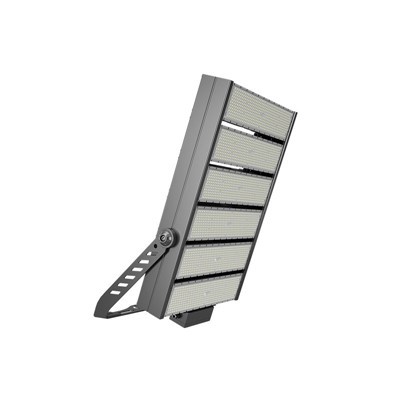
LED lamp head
As a lighting terminal, LED lamps have the characteristics of high brightness, low power consumption and long life, and are the most ideal light source for solar street lights. High-quality LEDs can also reduce light decay and improve lighting effects.
Lithium battery / Gel battery
Store the electricity generated by photovoltaic modules during the day for use at night. Lithium batteries are small in size, high in energy density and long in cycle life, and are gradually becoming the mainstream choice; Gel batteries have better stability and are more suitable for high temperature or extremely cold areas.
Intelligent controller
The brain of the entire system. It is responsible for intelligent control of the entire process of photovoltaic charging, battery discharge, LED light on and off, etc. It is usually equipped with light control (automatic recognition of darkness and light) and time control (timing lights on and off) functions. Some high-end products also support remote control, APP operation and other functions.
Light pole and mounting bracket
As a supporting structure, it must be firm and reliable, wind-resistant and corrosion-resistant, and also take into account aesthetics and functional wiring. High-quality light poles are often treated with hot-dip galvanizing and spraying to ensure long-term durability.
Detailed explanation of working principle: Sunlight charging → Intelligent discharge → Automatic dimming
The operation process of solar street lights is completely dependent on natural light, and its working process is roughly as follows:
During the day, when there is sufficient light, the solar panel starts working, converting light energy into electrical energy, which is stored in the battery after being adjusted by the controller. The controller will monitor the battery power in real time to ensure that the charging process is safe and efficient and avoid overcharging.
After nightfall, when the light is lower than the set threshold, the controller automatically determines that it is "dark" and starts the LED lamp head for lighting. The brightness of the light can be adjusted according to the set time period, such as full light in the first half of the night and half light in the second half of the night, taking into account lighting needs and energy-saving strategies.
At sunrise the next day, the light is restored, and the controller automatically turns off the lamp head after judging that it is "dawn", and the entire system enters a new round of charging cycle.
This "self-generation, self-storage, and self-control" design does not rely on the municipal power supply system, avoids wiring and cabling and later electricity bills, and is an ideal solution for achieving regional independent lighting.
From product structure to operating principle, solar street lights seem simple, but in fact they are a highly coordinated intelligent system. For suppliers, only by properly controlling aspects such as structure selection, component quality, and control logic can they truly deliver a set of durable, worry-free, and high-performance lighting solutions to customers.