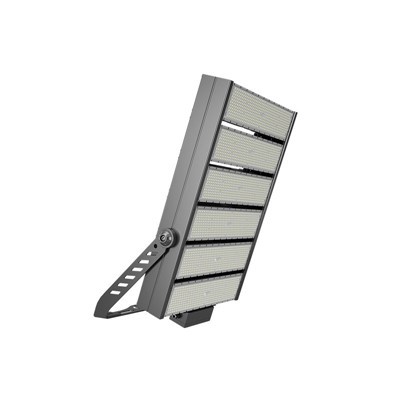

Watts (W):
Indicates the consumption power that a luminaire generates to provide light, that is, the lower the power value in W, the lower the energy consumption. However, it is worth remembering that only a high or low power does not define the efficiency of the luminaire, for this the luminous flux must also be considered, that is, how much the luminaire illuminates or how much light it emits.
Lumen (Lm):
Greatness that represents the luminous flux, is the amount of light that the luminaire emits.
The LED today is the lighting system that consumes less, but it is essential that, when purchasing an LED luminaire, both the power (Watt) and the Luminous flux (Lm) are analyzed, because one complements the other. This Lumen / Watt ratio is called luminous efficiency (Lm / W). The higher the number, the more efficient the luminaire will be, that is, the less power it will need to illuminate.
Note that, with the same consumption, the luminance (Lux) generated in the work plane is different, since the light package received is greater in the case in which the luminaire has better efficiency.
In summary, the ideal is to opt for the luminaire that emits the highest amount of lumens while consuming the least amount of energy. This is true luminotechnical efficiency. Knowing this, when purchasing LED luminaires, choose products that have an appropriate lumen value for the design of the environment, in addition to considering certified and high quality products when choosing. Only then will there be a guarantee that the investment was worthwhile and there was really a reduction in energy consumption. To make it even more assertive, the ideal is to carry out a lighting project with the necessary requirements for lighting a certain environment and aiming more and more at intelligent consumption.